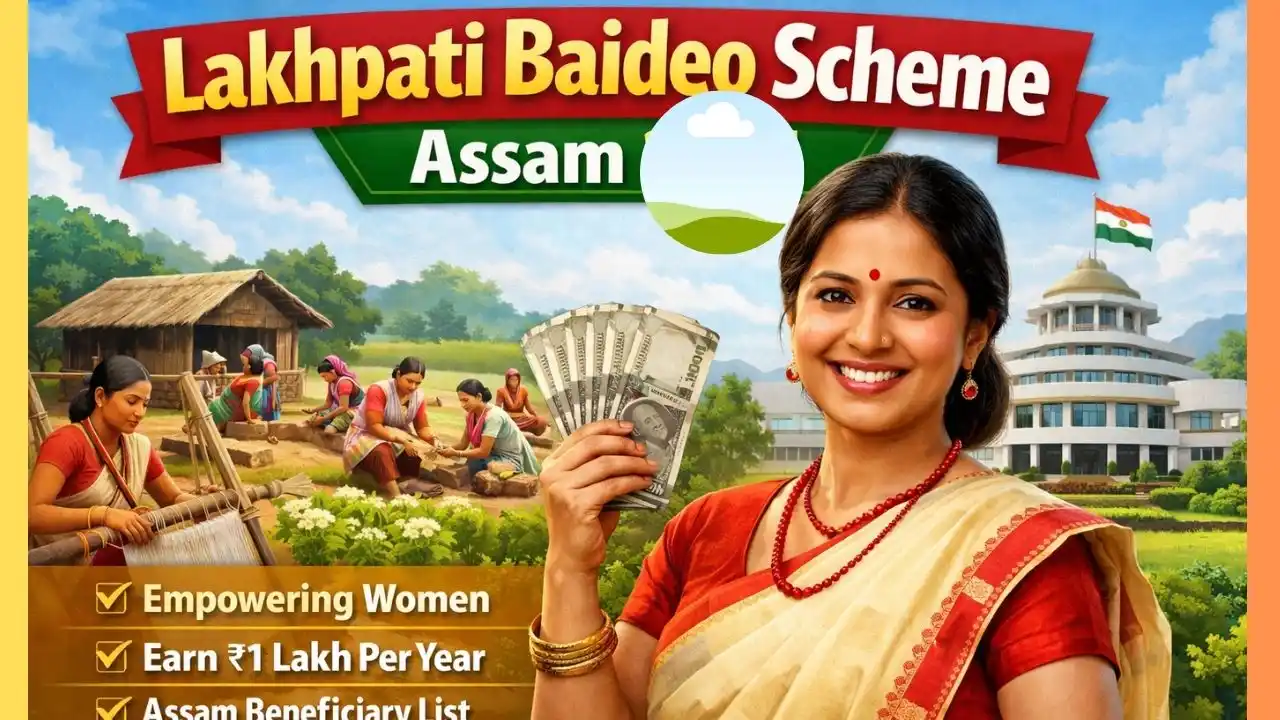
Lakhpati Baideo Scheme Assam 2026: Eligibility, Benefits, Application Process, Beneficiary List & Full Details
Women’s economic empowerment has become a central pillar of Assam’s development strategy, and the Lakhpati Baideo Scheme stands at the heart of this vision. Launched by the Government of Assam, this scheme is not about short-term financial help. It is about transforming rural women into confident earners and decision-makers within their families and communities.
The goal is clear. Enable women, especially those connected with Self-Help Groups, to build sustainable livelihoods and reach an annual income level of around ₹1 lakh. This income benchmark is symbolic as well as practical. It represents financial stability, dignity, and independence.
The Lakhpati Baideo Scheme is more than a welfare program. It is a structured roadmap that combines financial assistance, skill training, mentoring, and long-term planning. Through this initiative, Assam aims to strengthen rural economies by placing women entrepreneurs at the center of growth.
This article explains the scheme in detail, including its meaning, eligibility, benefits, beneficiary list process, financial structure, application method, and rollout timeline.
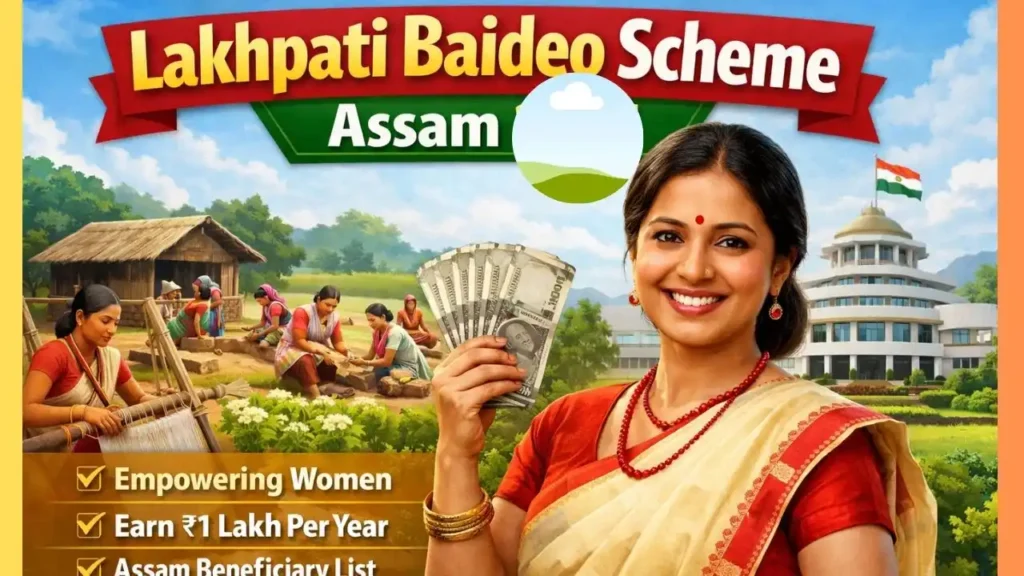
What Is the Lakhpati Baideo Scheme?
The Lakhpati Baideo Scheme is a flagship women empowerment initiative of the Assam government. Its primary purpose is to help rural women become micro-entrepreneurs and earn a stable annual income of approximately ₹1 lakh.
The scheme focuses mainly on women who are members of Self-Help Groups. These groups already function as grassroots financial and social units, making them ideal platforms for entrepreneurship development.
Under this scheme, women receive step-by-step financial support instead of a one-time payment. Along with money, they are provided training, guidance, and mentoring so they can start and expand small businesses. These businesses may include agriculture-based activities, livestock rearing, handicrafts, weaving, retail shops, food processing, tailoring, or service-based enterprises.
The broader idea is simple. When women become financially independent, families become more resilient, children’s education improves, and rural communities grow stronger. The Lakhpati Baideo Scheme is built around this logic.
Connection with Mukhya Mantri Mahila Udyamita Abhiyan (MMUA)
Officially, the scheme operates under the name Mukhya Mantri Mahila Udyamita Abhiyan, commonly shortened to MMUA. However, in public discussions and media coverage, it is widely known as the Lakhpati Baideo Scheme.
Both names refer to the same program. The government uses the term “Lakhpati Baideo” to make the scheme more relatable and aspirational for women at the grassroots level.
MMUA aligns with Assam’s broader development goals, including livelihood generation, poverty reduction, and inclusive growth. It works alongside rural development programs and women-centric initiatives already active in the state.
Meaning of Lakhpati Baideo
The phrase “Lakhpati Baideo” literally means “wealthy sister.”
In the context of the scheme, it refers to women who are guided and supported to achieve an annual income of at least ₹1 lakh through entrepreneurial activities. The term is symbolic. It represents confidence, self-reliance, and social recognition.
This naming approach helps change mindsets. Instead of seeing themselves as beneficiaries of aid, women are encouraged to see themselves as entrepreneurs and income creators. That psychological shift is a core strength of the scheme.
Lakhpati Baideo Scheme Assam Beneficiary List
One of the most searched topics related to the scheme is the beneficiary list. Women want to know whether their names have been selected and how to verify their status.
To ensure transparency, beneficiary lists are prepared and released district-wise. These lists are usually available in PDF format and include details such as the beneficiary’s name, village, block, and SHG affiliation.
How Beneficiary Verification Works
The lists are generated through the National Rural Livelihoods Mission framework. Women can verify their names by checking district, block, and village-level records.
For those without internet access, physical copies of the lists are displayed at Panchayat offices, SHG cluster offices, and other local administrative centers. This ensures that rural women are not excluded due to digital barriers.
The lists are updated periodically. Women are advised to check the latest version to confirm their inclusion and payment status.
Which State Has the Lakhpati Baideo Scheme?
Currently, the Lakhpati Baideo Scheme is exclusive to Assam. It is a state government initiative, not a national program.
While other states in India run women entrepreneurship or livelihood schemes, they operate under different names and guidelines. Assam’s model has gained attention due to its scale and structured multi-year support.
The scheme aims to cover around 40 lakh women associated with Self-Help Groups across the state. This large outreach makes it one of the most ambitious women-led livelihood programs in the region.
Lakhpati Baideo Scheme Assam: Eligibility Criteria
Understanding eligibility is crucial. The Assam government has set specific conditions to ensure targeted and effective implementation.
Who Can Apply
- The applicant must be a permanent resident of Assam
- The applicant must be a woman
- She must be an active member of a registered Self-Help Group
- A valid bank account is mandatory
- Basic identity and residence documents must be available
Population Control Conditions
As part of broader state policy, population-related conditions are also applied.
- Women from General and OBC categories should have no more than three children
- Women from SC and ST categories should have no more than four children
These conditions align the scheme with Assam’s long-term social development framework.
Financial Assistance Under the Lakhpati Baideo Scheme
The financial structure of the scheme is one of its most important features. Instead of providing a lump sum, the assistance is divided into stages based on progress and performance.
Year 1: Seed Capital Support
In the first year, eligible women receive ₹10,000 as seed capital. This amount helps them start a small business or income-generating activity.
The focus at this stage is experimentation, learning, and building confidence.
Year 2: Expansion Assistance
In the second year, women who continue their activities receive financial support of up to ₹25,000.
This amount includes:
- ₹12,500 as a government grant
- ₹12,500 as a bank loan
This structure encourages financial discipline and credit linkage while reducing risk.
Year 3: Growth Incentive
In the third year, women who demonstrate successful and sustainable business performance become eligible for ₹50,000 as growth support.
This stage is designed to scale up profitable ventures and help women cross the ₹1 lakh annual income mark.
Overall Budget
The scheme is backed by an allocation of around ₹4,000 crore. This funding supports approximately 40 lakh women across Assam over multiple years.
Lakhpati Baideo Scheme PDF: Purpose and Use
PDF documents play an important role in this scheme. These PDFs usually contain beneficiary lists, guidelines, and district-wise details.
Women use these documents to:
- Check whether their names are included
- Verify village and block-level information
- Track eligibility and payment stages
Keeping a copy of the relevant PDF is useful for future reference and grievance resolution.
How to Apply for the Lakhpati Baideo Scheme
Unlike many online-centric schemes, the Lakhpati Baideo Scheme relies heavily on grassroots institutions.
Offline Application Process
Most applications are handled offline through:
- SHG cluster offices
- Panchayat offices
- District Rural Development Agency offices
Women submit their details, documents, and business interests through their SHG leaders. These applications are then verified at the block and district levels.
Online Application Possibility
There is no widely promoted standalone online portal exclusively for the Lakhpati Baideo Scheme. In some cases, data may be uploaded through rural livelihood mission platforms.
However, women are advised to rely on their SHG leaders, block coordinators, or Panchayat officials for accurate guidance.
Lakhpati Baideo Scheme Registration Process
Registration begins at the village level. SHG leaders play a central role in organizing registration drives.
During these drives:
- Women fill out basic personal and SHG-related details
- Bank account information is collected
- Business activity preferences are recorded
After submission, applications undergo verification at higher administrative levels. Selected beneficiaries are then included in the official list for financial support.
Keeping SHG membership active and bank details updated improves the chances of selection.
Launch Date and Implementation Timeline
The Lakhpati Baideo Scheme was officially announced in January 2024 as part of Assam’s budget and women-focused development plans.
The major rollout phase began in April 2025. During this period, the Chief Minister initiated the distribution of seed capital to thousands of women across multiple districts.
The scheme is being implemented in phases. District-wise coverage ensures administrative efficiency and proper monitoring. Over time, the government aims to include all eligible SHG women across Assam.
Why the Lakhpati Baideo Scheme Matters
This scheme represents a shift in how rural development is approached. Instead of viewing women as dependents, it treats them as economic drivers.
By combining money, mentorship, and monitoring, the program increases the chances of long-term success. It also strengthens SHGs, improves household incomes, and stimulates local markets.
Most importantly, it gives women control over their financial future.
Lakhpati Baideo Scheme F.A.Q.
– What is the main objective of the Lakhpati Baideo Scheme?
The core objective is to help rural women in Assam achieve sustainable annual earnings of around ₹1 lakh by supporting them in starting and growing small businesses. The scheme focuses on long-term income generation, not one-time financial relief.
– Who is eligible to benefit from the Lakhpati Baideo Scheme?
Women who are permanent residents of Assam and active members of registered Self-Help Groups can benefit from the scheme. They must have a valid bank account and meet the population-related eligibility conditions set by the state government.
– How much financial assistance is provided under the scheme?
Financial support is given in phases. Women receive ₹10,000 as seed capital in the first year, up to ₹25,000 in the second year through a mix of grant and loan, and ₹50,000 in the third year based on business performance and sustainability.
– How can beneficiaries check their names in the Lakhpati Baideo Scheme list?
Beneficiary lists are prepared district-wise and shared through official rural development channels. Women can check their names through SHG offices, Panchayat offices, or district-level rural development authorities. Lists are updated periodically.
– Is there an online application portal for the Lakhpati Baideo Scheme?
There is no separate, dedicated online portal for direct application. Registration and application are mainly handled offline through Self-Help Groups, Panchayat offices, and block-level rural development offices.
Conclusion
The Lakhpati Baideo Scheme is not just a government program. It is a movement toward economic dignity for women in Assam. By targeting Self-Help Group members and supporting them through a structured, multi-year approach, the scheme lays a strong foundation for sustainable livelihoods.
From seed capital to growth incentives, every stage is designed to build confidence, skills, and income stability. The emphasis on transparency, local implementation, and community involvement makes it accessible even in remote areas.
For women in Assam, the scheme offers more than money. It offers opportunity, independence, and a clear path to becoming a Lakhpati Baideo in both name and reality.
As the program continues to expand, its long-term impact will be measured not only in numbers but in stronger families, thriving villages, and empowered women shaping Assam’s future.
Also read:-